
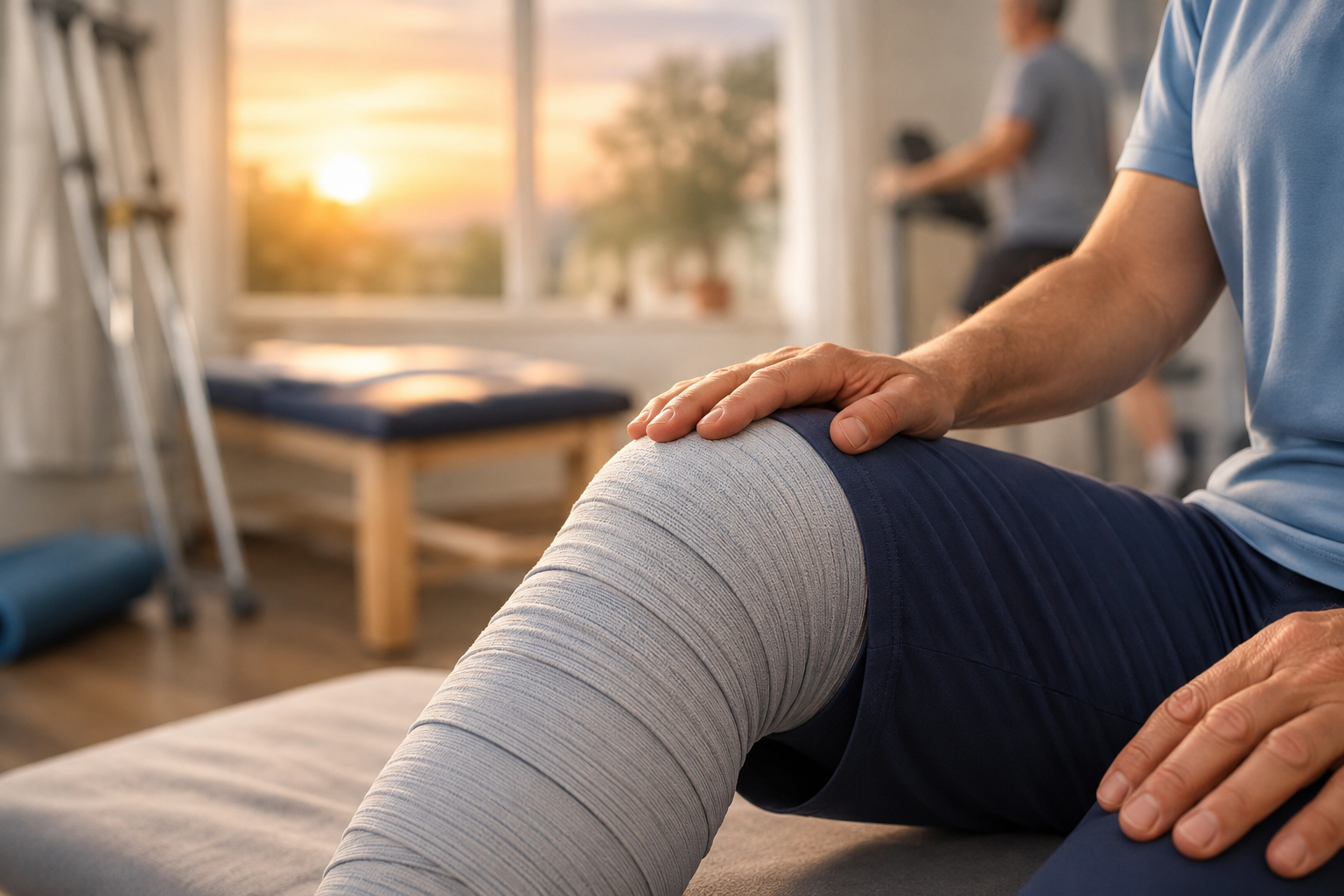
Many people notice that knee pain becomes sharper after sitting for a long time, waking up in the morning, or standing after rest, even when the knee felt manageable earlier in the day. This stiffness can slowly affect walking, climbing stairs, daily movement, and confidence during routine activities, especially in adults with joint strain, aging related wear, injuries, or inactive lifestyles. This guide helps you learn why knee stiffness happens after rest, what conditions may be linked to it, and how proper movement, physiotherapy, and daily care can reduce discomfort safely.
Knee stiffness after rest usually happens because the joint and surrounding muscles become less active during periods of inactivity. When movement stops for some time, the fluid inside the knee joint does not circulate efficiently, making the area feel tight and difficult to move. This is why many people feel discomfort during the first few steps after sitting, sleeping, or driving for long hours.
The problem can become more noticeable in older adults, people with excess body weight, office workers, and individuals recovering from injuries. Conditions like osteoarthritis, ligament strain, cartilage wear, and muscle weakness can increase this stiffness. In some cases, the pain improves slightly after moving around because the joint becomes warmer and circulation improves gradually.
Several medical conditions can cause stiffness and discomfort after inactivity. Osteoarthritis is one of the most common reasons, especially in middle aged and elderly adults. In this condition, the protective cartilage inside the joint slowly wears down, creating friction and reduced movement. People often describe the feeling as heaviness, tightness, or difficulty bending the knee during the first few minutes of movement.
Another possible reason is patellofemoral pain syndrome, where pain develops around the kneecap due to muscle imbalance, overuse, or improper movement patterns. Ligament injuries, tendon irritation, and meniscus problems may also create stiffness after resting. In some people, inflammation caused by rheumatoid arthritis or gout can make morning stiffness last much longer.
Many people focus only on pain relief and ignore lifestyle habits that increase stiffness every day. Long sitting hours, lack of exercise, poor footwear, and sudden heavy activity can place repeated stress on the knee joint. Even sleeping positions and weak core muscles can indirectly affect knee movement and stability.
People working desk jobs often sit with bent knees for several hours without stretching. This position keeps the muscles shortened and reduces circulation around the joint. Similarly, individuals who avoid movement due to fear of pain may gradually develop weaker muscles, making the stiffness more severe over time.
Physiotherapy focuses on improving movement, flexibility, muscle support, and joint function instead of only masking pain temporarily. A physiotherapist usually checks posture, walking pattern, muscle weakness, and joint mobility before creating a treatment plan. This approach helps target the real reason behind stiffness after rest.
Treatment often includes stretching exercises, strengthening routines, balance training, and guided movement therapy. In some cases, heat therapy, ultrasound therapy, or electrical stimulation may be used to reduce pain and improve circulation. Gentle movement is important because complete rest can sometimes increase stiffness further.
Protecting knee health requires consistency rather than aggressive treatment. Many people wait until movement becomes difficult before seeking help, but early care often reduces future complications. Daily movement, proper muscle conditioning, and healthy body mechanics can help reduce repeated stress on the knee joint.
People with recurring stiffness should avoid staying inactive for long periods. Controlled activity usually supports joint lubrication and muscle flexibility. It is also important to use proper support during exercise and maintain balanced movement habits throughout the day.
Knee pain after rest is often linked to stiffness, muscle weakness, reduced mobility, or underlying joint conditions that slowly affect everyday movement. Ignoring these signs can make walking, climbing stairs, and daily activities more uncomfortable over time. Early attention, guided exercises, healthy movement habits, and proper medical assessment can help reduce discomfort and improve joint function safely. Consistent care usually provides better long term improvement than relying only on temporary pain relief methods or prolonged rest.
Eureka Home Healthcare helps patients access reliable Knee Pain MRI services through trusted diagnostic partners, making advanced imaging more convenient and stress free. We support patients of all ages with professional healthcare coordination and personalized assistance. Our DHA licensed and experienced healthcare team is committed to safe, compassionate, and high quality care. With affordable service options, patients and their loved ones can receive the medical attention, comfort, and support they need without the inconvenience of hospital visits.
In the home setting, Nurses play an integral role in the delivery of quality healthcare services that generates trust and collaboration for both the care of the client and the maintenance of health of other family members as well.
Office 107, Business Point Building, Port Saeed, Dubai, United Arab Emirates
Mob : +971 50 3860 777
Tel : +971 4 26 68 222
© 2023 Copyright Eureka Home Health Care | Patient Rights | All rights reserved.
MOH APPROVAL # NGBTGZGQ-010726